

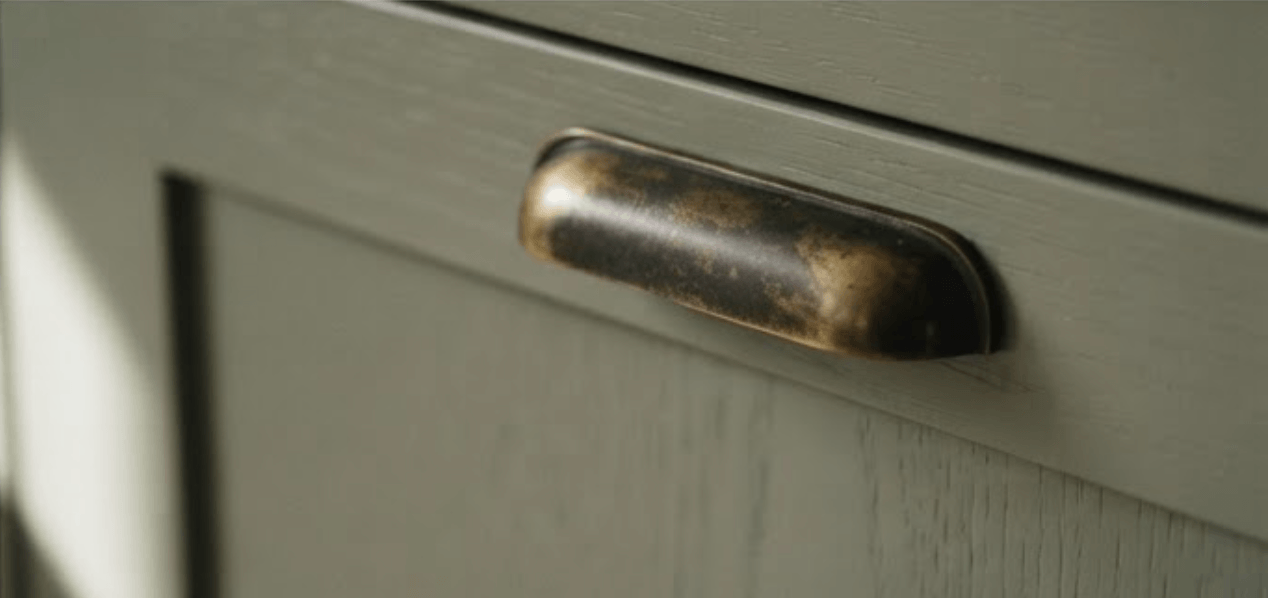
The best materials do not need to remain perfect. They become more interesting as they are used, touched and lived with.
When choosing finishes for an interior, we often focus on how they look on the day the project is completed. But a home is not a photograph. Materials will be walked on, cleaned, scratched, exposed to sunlight and used every day.
The real question is not whether a material will change. It is whether it will change well.
Natural materials often have an advantage because variation is already part of their character. Wood develops subtle changes in colour. Natural stone may acquire small marks and differences in tone. Brass and other untreated metals can develop a patina that makes them feel richer rather than worn.
This does not mean that natural is always better. Some engineered materials perform exceptionally well, particularly in areas that require resistance to moisture, stains or heavy use. What matters is understanding what each material is designed to do.
One of the most important things to consider is how visible wear will be.
A perfectly uniform surface can look beautiful when new, but even a small scratch may become immediately noticeable. A textured, patterned or naturally varied material often absorbs the signs of everyday life much more gracefully.
Colour also matters. Extremely dark or extremely light surfaces can reveal dust, fingerprints and scratches more easily than materials with a little visual depth.
Before choosing a finish, think about where it will be used and how often it will be touched.
Kitchen worktops, flooring, handles and bathroom surfaces need to perform very differently from a decorative wall or an occasional piece of furniture.
There is also value in choosing materials that can be repaired.
Solid wood can be sanded. Natural stone can often be refinished. Certain metals can be polished or allowed to develop their own patina. Materials that can evolve and be maintained usually have a longer life than surfaces that need to remain visually perfect.
Good interiors are not designed to stay untouched.
They are designed to be lived in.
The materials that age best are often the ones that allow that life to become part of their character.